This tree is such an amazing giver that is deserves its homage here. From its intense golden fall colors to its rapid growth, this tree is much more than just a tree to produce maple syrup from. Here in Northern Kentucky, we are at one of the southernmost lines of sugar maple, yet it thrives on my farm, especially on the north face and in south facing valleys. It grows thick and in stands that allows for harvest of excess numbers of trees for non-timber forest products. And my goats love to eat the leaves too! In general, it’s a sub canopy tree, flanking the canopy oaks and hickories. I am blessed to have thick stands and groupings of large trees that makes it easy to tap here at Treasure Lake. In some areas of the forest, they dominate and are tall and spindly yet in some areas of the savannah or edges they have long swooping lateral branches. Their form adapts to management and light availability, a simple reflection of their intelligence. At the end of the day it’s a very multifunctional tree with great beauty.


Maple Syrup Class at Treasure Lake January 27th, 2024
Uses beyond tapping for Sugaring:
As I said just above, it grows thick often in stands that can be thinned. I prefer to cut the occasional sugar maple in these situations to allow other sugar maples around to get bigger for tapping sooner or more taps per tree. It also creates a bit more of a mosaic of growth below because sugar maples produce a very deep shade and not much grows beneath them in these thick stands, even nonnatives like honeysuckle or multiflora rose. They are calcium accumulators, however, so ginseng and other shade loving medicinals can be planted below them. With thinned trees being cut from the forest you can grow medicinal and edible mushrooms from them like lion’s mane, reishi, and shiitake. There is actually more and only the oak has more options of what to grow on it which can be seen below.
Learn About How to Grow Mushrooms on Logs (fieldforest.net)
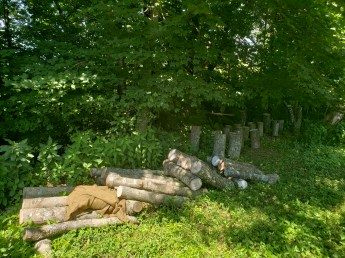
So, you can grow mushrooms from cut logs in fall or late winter, you can grow medicinals below them, you can have livestock graze them as well. Sometimes when I do my thinning of trees, it’s not for mushrooms rather for silvopasture. My goats relish the leaves, large and nutritious and since they cast such a deep shade it’s important to recognize their role in the pasture growth below in a savanna. Too much can slow undergrowth but too little the animals leave the forest for shade of their houses. I definitely leave some sugar maples here and there in my savanna’ even if I never intend to tap them because of the deep shade. Also, because again, they are a dynamic accumulator of calcium I like to leave them to help enrich the pasture with their leaf fall and mycorrhizzal fungi connection. This is also why in certain areas of the farm we mow the leaves of sugar maples and others like oaks into piles and use that extensively in our robust composting system (Thermophilic Composting (Hot) – Permaculture Design Course Handbook (treeyopermacultureedu.com). This tree does indeed also produce a hard wood, great for different woodworking projects but also as a firewood. The sap sucking woodpecker of course loves its sugary sap water that they tap with their bills. Additionally, as they age to old growth, they have great cavities for wildlife homes and also food like squirrels eating the seeds.


Sugar Maples for Sugaring:
Each winter, the trees awake as spring approaches. The sap rises from the rooted winter storage and is the beginning of the tree swelling its buds and then leafing out. When the sap rises, you drill a hole in the tree and insert a spile and collect the water. It’s kind of like what the sap sucking woodpecker does with its beak and tongue. Furthermore, once you have collected the water you boil it down to concentrate the sugars and preserve the harvest. This allows you to keep it on the shelf for quite some time once it is bottled. From there enjoy using this sweetener knowing it came locally, it is full of minerals, and is not GMO beet root sugar or high fructose corn syrup. It’s maple syrup, a tradition that has been occurring for millennia. Natives achieved the heat for boiling maple syrup down just as they heated their sweat lodges; rocks heated in a fire and transferred. Furthermore, this modernized process is an important staple in our non-timber forest products and a key mission here on the homestead. It’s about bringing value to our forests, to spend more time in them, even when they lay naked and bare there is still much beauty. And a lot to be grateful for.


 TreeYo Permaculture
Leave a comment